
How to Hit Your Protein Goals When Your Appetite Is Low

Updated: Oct 3

If getting your protein in has felt harder lately — you are not imagining it.
And it is not a discipline problem.
In midlife — and especially on GLP-1 medications, during high stress, or through illness — appetite often drops significantly. And protein becomes the hardest thing to get in.
Not because you do not care. Not because you are not trying. But because protein requires more volume, more chewing and more effort than most people realize — and when appetite is low, it is usually not the easiest option within reach.
So naturally — you reach for what is easy. And easy is usually carbs.
This blog is for the season when the usual approach is not working. When forcing a full plate feels like too much. When you need a smarter strategy — not a harder one.
Why Protein Gets Hard When Appetite Is Low
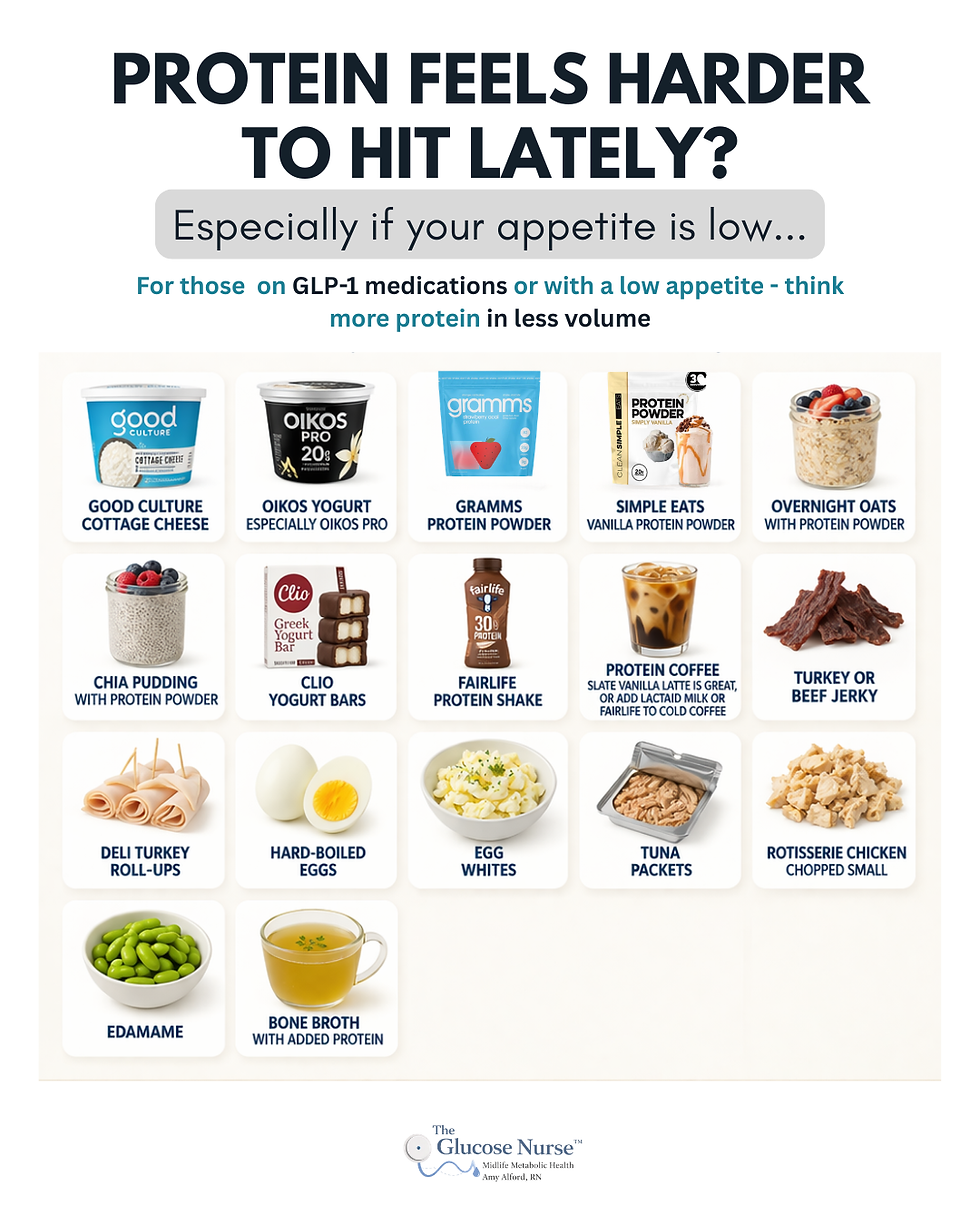
Here is what is actually happening when getting your protein in feels harder than it should:
Your appetite is significantly lower
GLP-1 medications work by slowing gastric emptying and reducing hunger signals. This is exactly what makes them effective for weight loss — but it also means you feel full much faster and much longer than before. The same is true during high stress, illness, cancer treatment, or other medical situations where appetite suppression is a side effect.
Sitting down to a full plate feels like too much
When you are not hungry, a full plate of food can feel genuinely overwhelming. The visual volume alone can suppress appetite further. This is not weakness — it is physiology.
Protein requires more volume and more chewing than carbs
A piece of chicken or a handful of eggs requires real effort to eat when you are not hungry. Crackers, bread and simple carbohydrates go down easily with almost no chewing. So when appetite is low your body gravitates toward the path of least resistance — which is almost never the high protein option.
The result is lower protein intake at the exact moment your body needs it most.
Why Protein Still Matters -- Even When Appetite Is Low
This is especially important for midlife women to understand. When we are not eating enough protein our body does not just stay neutral — it starts breaking down muscle tissue to meet its amino acid needs. And in midlife when we are already fighting natural muscle loss after 40 that breakdown accelerates.
Less muscle means a slower metabolism. A slower metabolism means harder fat loss. And for women managing blood sugar -- less muscle means less capacity to absorb glucose efficiently.
Protecting muscle during a low appetite season is one of the most important things you can do for your long term metabolic health.
The good news is that you do not need to force big meals to do it. You just need a different strategy.
The Strategy -- Think Small Volume, High Protein

Different seasons call for different strategies. We usually want to chew our protein -- a full chicken breast, a steak, hard boiled eggs. But that is not always possible.
When appetite is low the goal shifts:
More protein. Less volume.
Here is exactly how to do that:
Sip it
Liquid protein is your best friend in a low appetite season. It requires no chewing, minimal effort and can be sipped slowly throughout the day rather than eaten all at once.
Protein shakes -- 25-30g protein in one drink
Protein coffee -- add protein powder to your morning coffee for an easy 20-25g before the day even starts
Protein powder mixed in water -- simple, fast, minimal volume
Bone broth -- warm, soothing and easy to sip
Mix it
Adding protein to foods you are already eating is one of the easiest ways to boost your intake without adding volume.
Greek yogurt -- especially higher protein options like Oikos Pro -- eaten in small amounts
Cottage cheese -- high protein, soft texture, easy to eat even on a low appetite day
Chia pudding with protein powder stirred in -- nutrient dense and low volume
Overnight oats with protein powder -- slow digesting and filling with minimal effort
Grab it
When preparing food feels like too much these are the options that require zero effort:
Protein bars -- look for yogurt based options with at least 12g protein
Turkey or beef jerky -- high protein, portable, no prep needed
Deli turkey roll-ups -- 3-4 slices rolled up and eaten in seconds
Tuna packets -- 20g protein in a single serve packet with no refrigeration needed
Eat softly
When chewing feels like too much effort these options are soft, easy and still high protein:
Hard boiled eggs -- soft texture, easy to eat in small bites
Egg whites -- scrambled soft, easy to eat, high protein low volume
Rotisserie chicken chopped small -- already cooked, tender, easy to eat in small amounts
Edamame -- plant based protein that is soft, easy and can be eaten slowly
The Timing Strategy -- Break It Up

When appetite is low trying to eat full protein-rich meals three times a day is a recipe for frustration. Instead shift your approach:
Smaller amounts of protein more often throughout the day.
Instead of aiming for 40g protein at one sitting aim for 15-20g every few hours. A protein shake at 8am. A tuna packet at 11am. A small bowl of cottage cheese at 2pm. Egg whites at dinner. Small sips of protein coffee throughout the morning.
The total adds up without any single meal feeling overwhelming.
And when you do eat -- always start with protein first. Even in small amounts.
A Note for Those on GLP-1 Medications or in Medical Treatment
If you are on a GLP-1 medication like Ozempic, Wegovy, Mounjaro or Zepbound -- or if you are supporting someone through cancer treatment or another medical situation where appetite is suppressed -- the strategies above are especially relevant.
The goal during medical treatment is not perfect eating. The goal is getting adequate protein in whatever form is tolerable and sustainable on that particular day.
Some days that is a full protein shake. Some days it is three small bites of rotisserie chicken. Both count.
Progress over perfection. Always.
Always work with your licensed healthcare provider on your specific nutrition needs during medical treatment.
My Go-To Protein Products for Low Appetite Days
These are the products I personally use and recommend for getting protein in when appetite is low.
Gramms Protein Powder
This one is different from your typical protein powder — it is a clear protein which means it mixes in water like a drink, not a thick shake. No chalk. No heaviness. I mix mine with my afternoon water and electrolytes and it goes down easily even on days when food feels like too much. If you have ever struggled with the thick chalky powders designed for smoothies — this is a completely different experience.
Slate Vanilla Coffee Protein Drink
Protein and coffee in one drink. Ready to go. No prep, no mixing, no effort. Ideal for low appetite mornings when even making a shake feels like too much.
Simple Eats Protein Powder
This is the one I use in recipes. It mixes beautifully into oats, smoothies and anything you are cooking or baking. Not chalky at all — the vanilla flavor works with everything. If you want a protein powder that disappears into your food rather than sitting on top of it this is the one.
The Bottom Line
This is one of those seasons where a different approach makes all the difference.
You do not need to force big meals. You do not need to eat the same way you did before your appetite changed. You just need a smarter way to get your protein in.
Sip it. Mix it. Grab it. Break it up. Start with protein first whenever you do eat.
Small consistent protein intake protects your muscle, stabilizes your blood sugar and keeps your metabolism working for you -- even in the hardest seasons.
Midlife fat loss is not about eating less. It is about eating strategically for your hormones.
Want my full plan? 💛
Inside my FASTer Way VIP group, you'll get personalized macros, workouts, meal guidance + access to the brand-new app to help you put it all together.
What I add is the protein + fat + fiber/blood sugar layer, my perspective as a nurse, and me in your corner helping you learn how to personalize the plan for YOUR life.
Use code FOUNDER for $20 off your first month.
Want to See What YOUR Blood Sugar Is Actually Doing?
Everything I share is based on real data -- my own CGM data from wearing a continuous glucose monitor daily paired with the SIGNOS app. The foods that keep me flat. The ones that spike me. The strategies that actually work.

From a nurse's perspective -- CGM User and Personal Data Sharer. Not medical advice.
Not ready for a CGM yet? Start free:
Your Next Steps
IR Checklist -- 10 signs your body may be trying to tell you something
Health is wealth.
-- Amy Alford, RN
Your Glucose Nurse | @absolutelyamyable
From a nurse's perspective -- not medical advice. This content is for educational purposes for adults with insulin resistance or prediabetes who are not on insulin or diabetes medication. Always consult your licensed healthcare provider.


Comments